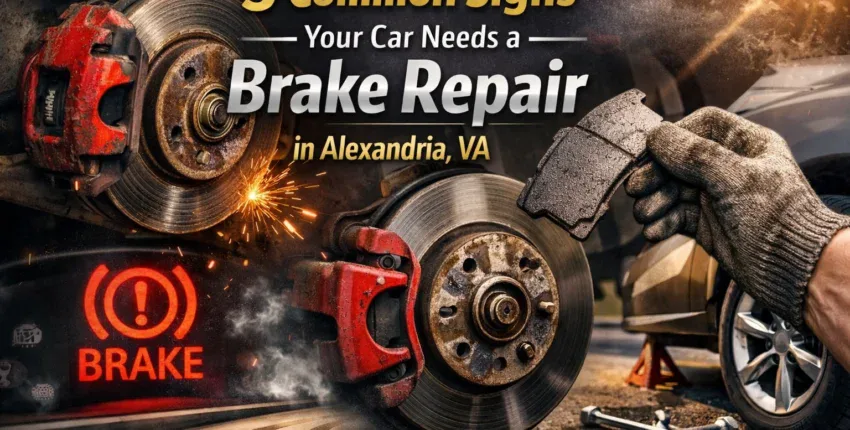

Brake repair signs and services for vehicle safety in Alexandria, VA. Expert brake system diagnostic.

5 Common Signs Your Car Needs a Brake Repair in Alexandria, VA

When you’re cruising down Duke Street or navigating the stop-and-go traffic near Old Town, the last thing you want to worry about is whether your car will actually stop when you hit the pedal. Your brakes are, without a doubt, the most critical safety feature on your vehicle. But let’s be honest: most of us don’t think about them until they start making a weird noise or the car feels a bit “off.”

At Telegraph Auto Care, we’ve been the go-to mechanic Alexandria VA residents trust for over 20 years. We’ve seen it all: from minor pad replacements to full-on braking system overhauls. We know that catching a problem early doesn’t just save you money; it keeps you and your family safe on the road.

In this guide, we’ll dive into the five most common warning signs that your car is screaming for a brake repair Alexandria VA. If you notice any of these, it’s time to swing by and let our ASE-certified experts take a look.


1. Squealing, Squeaking, or Grinding Noises

Have you ever pulled up to a red light and heard a high-pitched screech that made everyone on the sidewalk turn and look? That’s not just an embarrassing moment; it’s your car’s way of saying “help!”

The Squeal: A Built-in Warning

Most modern brake pads are designed with a tiny metal shim called a wear indicator. Think of it like an alarm clock for your wheels. When the friction material on your brake pads gets dangerously thin, this metal shim makes contact with the rotor, creating that piercing squeal. It’s a helpful reminder that your pads are reaching the end of their life.

The Grinding: The Danger Zone

If the squealing stops and turns into a deep, metallic grinding sound, you’ve moved from “maintenance needed” to “emergency.” Grinding means the friction material is completely gone, and the metal backing plate of the pad is rubbing directly against the iron rotor. This is like rubbing two pieces of sandpaper together: eventually, something is going to break.

The Impact of Ignoring It:
Ignoring a grind doesn’t just mean a louder noise; it means you are actively destroying your rotors. Instead of a simple pad replacement, you’ll likely need a much more expensive repair involving new rotors and potentially new calipers.

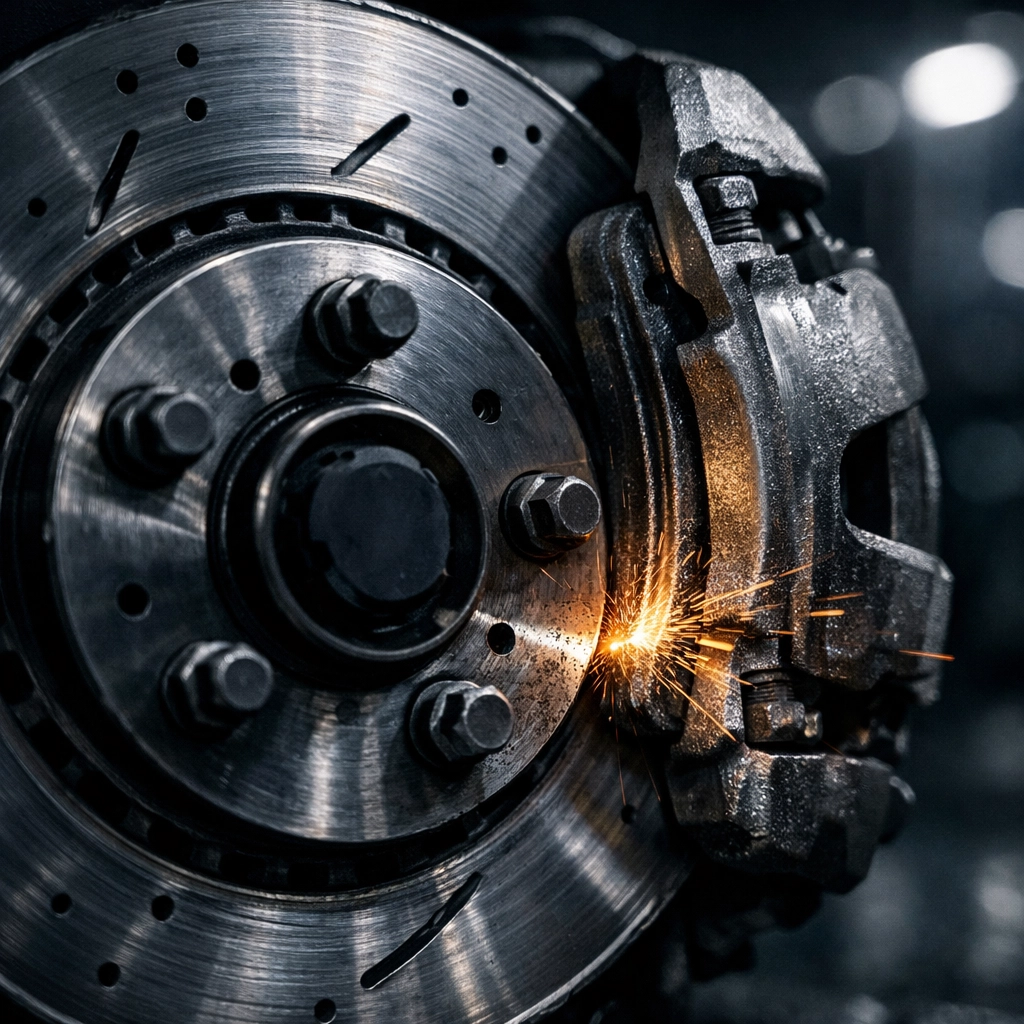
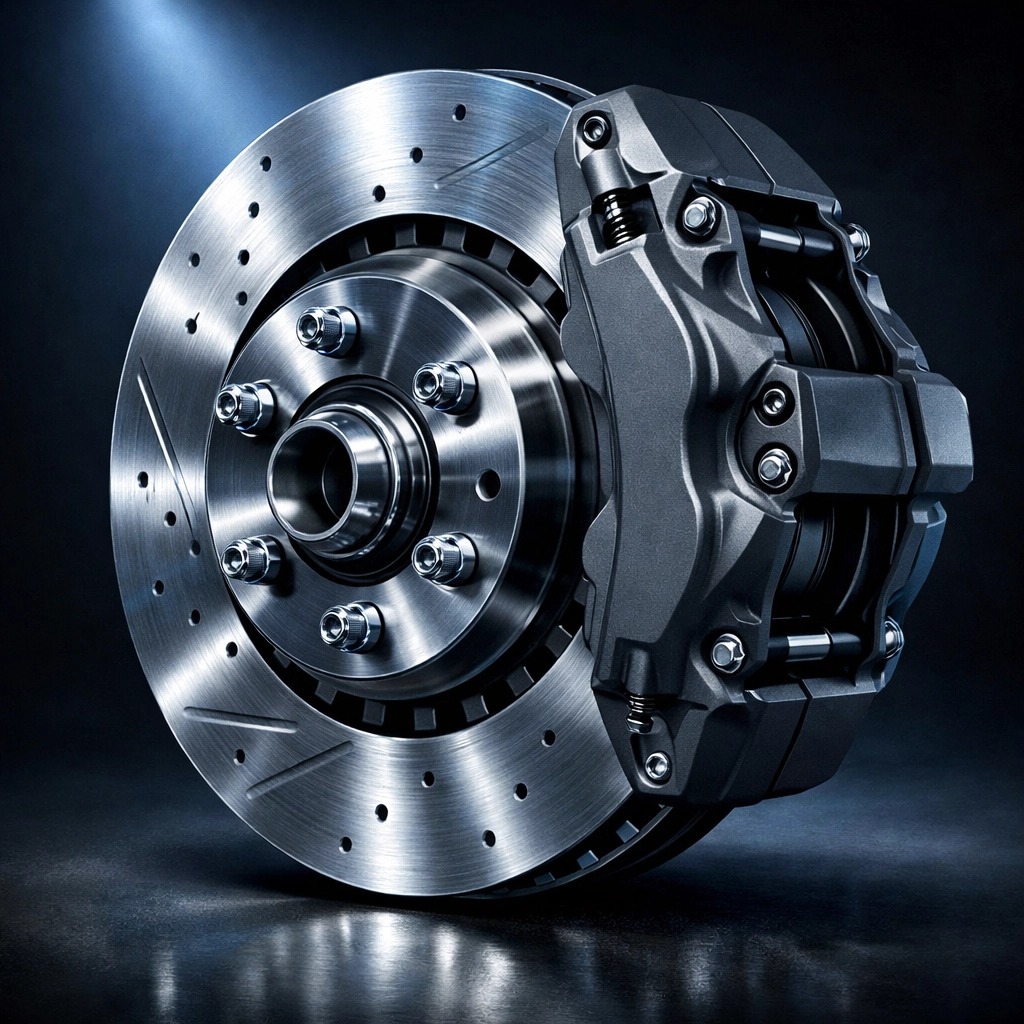
Damaged car brake rotor and caliper needing professional brake repair in Alexandria, VA.


2. A Soft, Spongy, or “Low” Brake Pedal

When you step on the brake pedal, it should feel firm and provide consistent resistance. If you feel like you’re stepping into a bowl of mashed potatoes, or if the pedal sinks all the way to the floorboard, you have a serious hydraulic issue.

What is “Spongy” Exactly?

In the world of auto repair, “spongy” means the pedal feels soft and requires more effort or distance to actually engage the brakes. This is often caused by air getting into the brake lines. Your braking system is a sealed hydraulic environment. Since air is compressible and brake fluid is not, air bubbles act like a cushion, preventing the force of your foot from reaching the wheels.

Checking for Leaks

Another culprit could be a brake fluid leak. If your fluid is low, your car can’t generate the pressure needed to stop effectively. You might see a small puddle of clear or amber-colored fluid under your car near the wheels.

The Impact of Ignoring It:
A soft pedal is a precursor to total brake failure. If the hydraulic pressure drops low enough, you might find yourself in a situation where the car won’t stop at all. This is why checking your fluid during standard maintenance auto service is so vital.


3. Vibrations or Pulsations When Braking

If your steering wheel shakes or your brake pedal pulses under your foot like a heartbeat, your car is trying to tell you something about your rotors.

Warped Rotors 101

The rotor is the large metal disc that your brake pads clamp down on to stop the car. Over time, the extreme heat generated by braking can cause these discs to warp or develop “thin spots.” When the pads try to grab a surface that isn’t perfectly flat, they bounce, which sends a vibration through the braking system and up to your foot or steering wheel.

Alexandria Driving Habits

In a city like Alexandria, VA, we do a lot of heavy braking. Whether it’s hitting the brakes suddenly on I-95 or riding them down a steep hill, heat is the enemy. Overheated rotors are much more prone to warping.

The Impact of Ignoring It:
Vibrations reduce the contact patch between the pad and the rotor, which means your car won’t stop as quickly as it should. Plus, the constant shaking can lead to premature wear on your suspension and steering components.

Driver pushing a spongy brake pedal to the floor, a sign your car needs a mechanic in Alexandria, VA.


4. Longer Stopping Distances (Brake Fade)

This is a subtle sign, but a dangerous one. Do you find yourself starting to brake earlier than you used to? Does it feel like the car is “gliding” a bit too far before coming to a complete halt? This is known as “brake fade.”

Why Performance Drops

Brake fade usually happens for two reasons:

  1. Worn Pads: There simply isn’t enough friction material left to grab the rotor effectively.
  2. Overheated Fluid: If you’re a “heavy” braker, your brake fluid can actually boil. Once it boils, it loses its ability to transfer force.

The Safety Risk

In an emergency situation: like a pedestrian stepping into the crosswalk or a sudden pile-up on the Beltway: every inch matters. A car that takes an extra ten feet to stop is a car that’s at risk of an accident.

The Impact of Ignoring It:
Decreased braking performance is a direct threat to your safety. If you feel like your car isn’t as “snappy” as it used to be, you should visit a mechanic Alexandria VA immediately for a diagnostic.


5. The Brake Warning Light Stays On

Your dashboard is like your car’s central nervous system. When a light comes on, it’s because a sensor has detected something outside of normal parameters.

Red vs. Yellow Lights

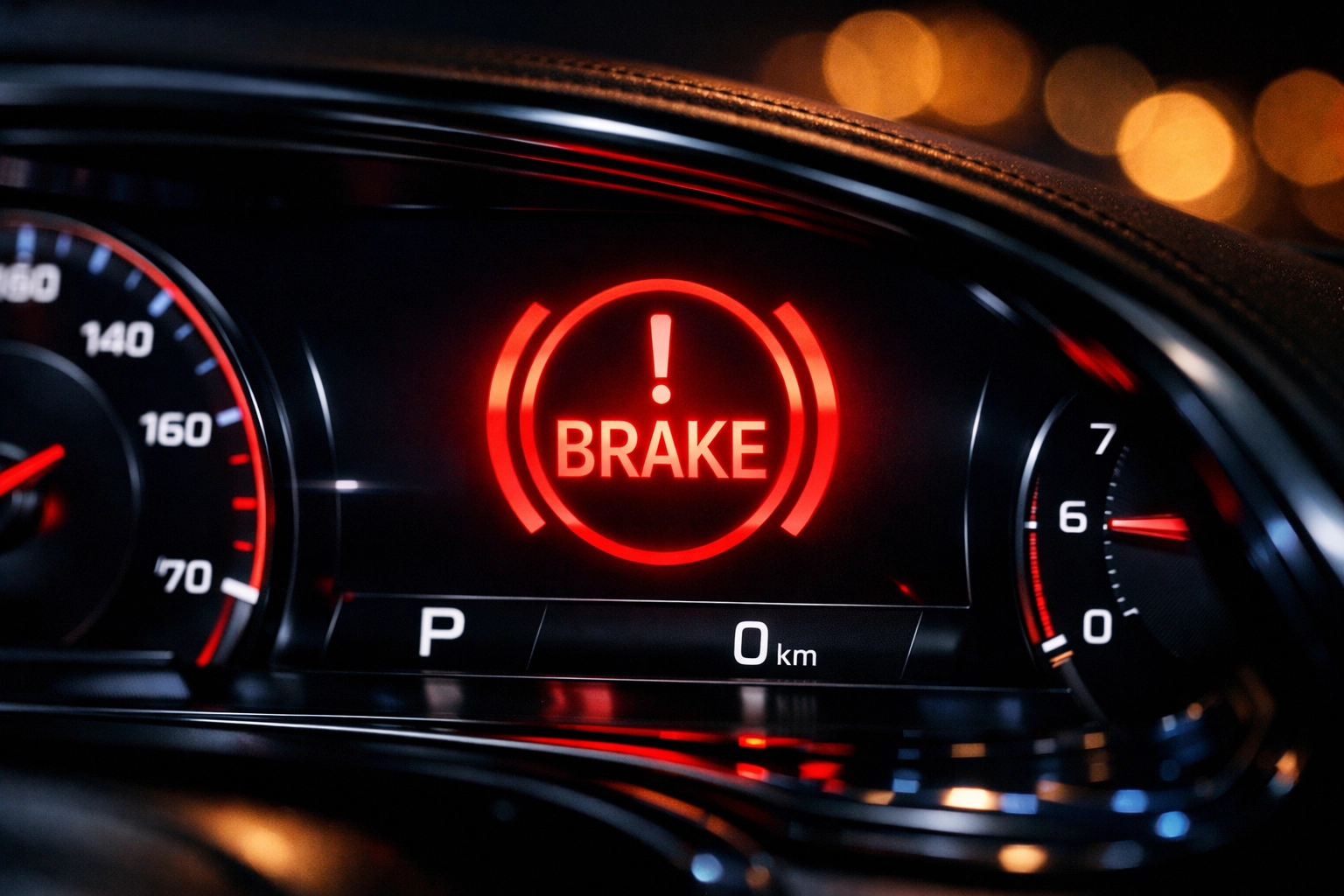
  • The Brake Light (Red): Usually indicates that your parking brake is engaged, your brake fluid is dangerously low, or there is a major pressure loss in the system.
  • The ABS Light (Yellow/Amber): This refers to your Anti-lock Braking System. While you’ll still have manual braking power, your car won’t be able to prevent the wheels from locking up during a skid.

Don’t Guess, Diagnose

Modern cars have complex sensors that can detect thin pads before you even hear them squeal. If that light is on, don’t play the guessing game. Use advanced automotive diagnostics to find the exact root of the problem.

The Impact of Ignoring It:
Modern safety systems like ABS and Traction Control rely on your brakes working perfectly. Ignoring a light could mean these systems fail when you need them most, like during a rainy Virginia afternoon.

Red brake warning light on a car dashboard signaling the need for expert brake repair in Alexandria, VA.


Why Choose Telegraph Auto Care for Your Brake Repair in Alexandria, VA?

We get it: auto repairs can be stressful. You want someone who knows what they’re doing and won’t charge you for things you don’t need. That’s exactly why we’ve built our reputation over the last two decades.

20+ Years of Experience

We aren’t the new kids on the block. We’ve been serving the Alexandria community for over 20 years. We know the local roads, the local climate, and the specific ways they affect your vehicle.

ASE-Certified Experts

Our technicians aren’t just “car guys.” They are ASE-certified experts. This means they’ve undergone rigorous training and testing to ensure they meet the highest standards in the industry. When it comes to brake repair Alexandria VA, you want the best of the best working on your vehicle.

A Friendly, Casual Approach

We believe in treating our customers like neighbors. We’ll explain exactly what’s going on with your car in plain English: no confusing jargon, just honest advice. Whether you need a simple fluid top-off or a complex auto electrical service, we’re here to help.


Don’t Wait Until It’s Too Late

Brake issues don’t fix themselves. In fact, they only get more expensive (and more dangerous) the longer you wait. A simple squeak today could be a total system failure tomorrow.

If you’ve noticed any of these signs: the noises, the smells, the vibrations, or the lights: do yourself a favor and get it checked out. It’s the best way to ensure your car stays on the road and out of the body shop.

Ready to get those brakes checked? You can schedule an appointment online or stop by our shop in Alexandria. We’re always happy to help you stay safe on the road!

For more tips on keeping your car in top shape, check out our car mechanic shop guide or read more about brake repair signs. Safe driving!

Car engine oil being poured during an oil change at Telegraph Auto Repair.

Why Regular Oil Changes Are Crucial for Your Engine’s Health

If you have ever owned a car, you’ve probably heard the same piece of advice over and over: “Don’t forget to change your oil!” It sounds like a simple chore, like taking out the trash or watering the plants. But in reality, an oil change is the single most important thing you can do to keep your vehicle running.

Think of your engine as the heart of your car. If the engine is the heart, then the motor oil is the lifeblood. Without clean, high-quality oil flowing through the system, things start to break down: fast. At Telegraph Auto Care, we see the results of neglected maintenance every day. We want to help you avoid those “Oh no!” moments by explaining why that little sticker in the corner of your windshield is your engine’s best friend.

In this guide, we will explain why regular maintenance is vital and how a simple oil change Alexandria VA can save you thousands of dollars in the long run.

The Lifeblood of Your Vehicle: Why Oil Matters

To understand why you need to change your oil, you first need to understand what it actually does. Motor oil isn’t just a lubricant; it’s a multi-tasking superhero that keeps your engine from destroying itself.

Lubrication: Keeping the Peace Between Metal Parts

Inside your engine, there are thousands of metal components moving at incredibly high speeds. Pistons are pumping, valves are opening and closing, and crankshafts are spinning. Without oil, these metal parts would rub directly against each other.

When metal rubs against metal, it creates intense friction. Friction creates heat and wear. Oil creates a thin, slippery barrier between these parts so they can glide past each other without getting damaged.

  • The Component: Pistons and cylinder walls.
  • The Function: Moving up and down thousands of times per minute to create power.
  • Signs of Trouble: A loud knocking or tapping sound coming from the engine.
  • The Impact: If the oil is too thin or dirty, the friction will eventually cause the parts to weld themselves together. This is what people mean when they say an engine is “seized.”

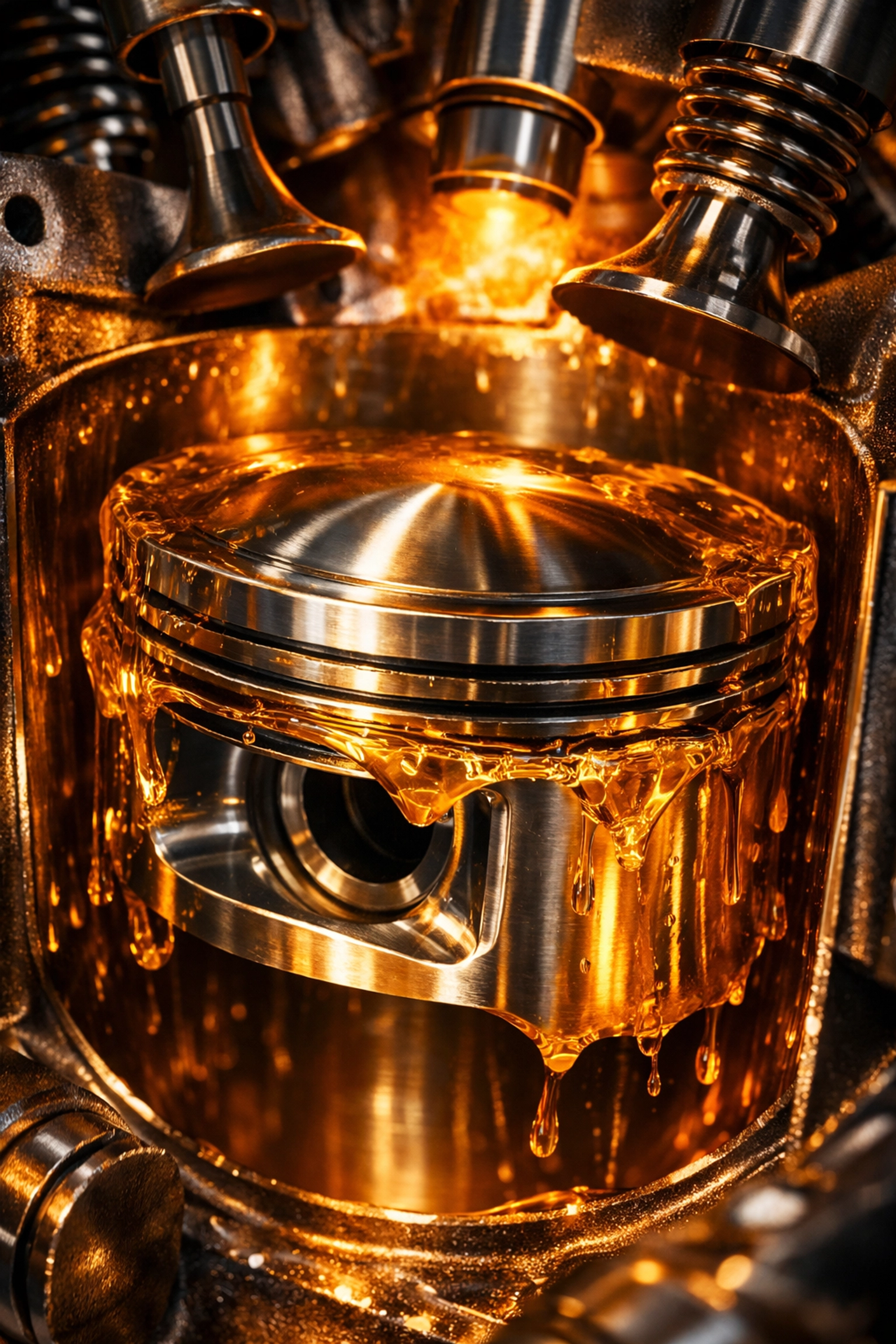
Close-up of a car engine piston lubricated with fresh golden motor oil for smooth performance.

Temperature Control: Keeping Things Cool Under the Hood

While your car’s radiator and coolant system do most of the heavy lifting when it comes to cooling, motor oil plays a significant supporting role. As oil circulates through the engine, it reaches areas that the coolant cannot. It absorbs heat from the combustion chamber and the friction-heavy zones, carrying it away to be dissipated.

Fresh oil is excellent at absorbing heat. However, as oil ages and breaks down, it loses this ability. If you’re looking for a mechanic Alexandria VA because your car is running hot, the first thing we often check is the condition of your oil.

Cleaning: The Engine’s Internal Janitor

Your engine is a controlled explosion, and explosions are messy. Over time, microscopic bits of carbon, dirt, and metal shavings build up inside the engine. Motor oil is designed to pick up these contaminants and carry them to the oil filter.

Without regular changes, the oil becomes saturated with “gunk.” Imagine trying to wash your dishes with a bucket of muddy water. Eventually, the water stops cleaning and starts leaving more dirt behind. That is exactly what happens when you skip your oil change.

The Real Cost of Skipping an Oil Change

We get it: life gets busy. Sometimes that “Oil Change Due” light comes on, and you figure you can squeeze out another 500 or 1,000 miles. While modern engines are tough, pushing the limits is a dangerous game. Here is what happens when you let your oil get too old.

The Sludge Monster

When oil stays in your engine too long, it begins to oxidize and break down due to heat and pressure. It transforms from a smooth liquid into a thick, black, jelly-like substance known as “sludge.”

Sludge is the enemy of performance. It blocks the narrow oil passages, preventing fresh oil from reaching critical components. Once sludge starts to form, it’s very hard to get rid of. It’s much cheaper to get a standard maintenance auto service than it is to pay for a full engine flush or a complete rebuild.

Reduced Fuel Economy

Everyone wants to save money at the pump. Did you know that regular oil changes can actually improve your gas mileage? When your engine is properly lubricated, it doesn’t have to work as hard to move its internal parts.

Less resistance means your engine uses less fuel to produce the same amount of power. According to the U.S. Department of Energy, using the correct grade of motor oil can improve your gas mileage by 1% to 2%. Over the course of a year, that adds up!

A modern SUV driving efficiently on a highway, highlighting peak engine performance and fuel economy.

Engine Longevity and Resale Value

A car is a massive investment. If you want that investment to last 200,000 miles or more, you have to take care of the engine. Vehicles with a documented history of regular maintenance are worth significantly more when it comes time to sell or trade them in.

If you’re curious about how else you can protect your car, check out our car mechanic shop guide for more pro tips on vehicle care.

When is it Time for an Oil Change in Alexandria, VA?

The old rule of thumb used to be “every 3,000 miles or three months.” While that’s still a safe bet for older cars, many modern vehicles can go 5,000, 7,500, or even 10,000 miles between changes thanks to synthetic oils.

However, “standard” intervals don’t always apply to everyone. If you live in Alexandria, you know our driving conditions aren’t always “standard.”

  • Stop-and-Go Traffic: Constant idling and short trips are actually harder on your oil than long highway drives.
  • Extreme Temperatures: Virginia summers can be brutal, and those cold winter mornings mean your oil takes longer to reach its ideal operating temperature.
  • Towing and Heavy Loads: If you’re using your truck or SUV to haul trailers or heavy gear, your engine works harder and needs fresh oil more frequently.

Signs to Watch For

Your car will often tell you when it’s thirsty for fresh oil. Keep an eye (and ear) out for these symptoms:

  1. The Oil Pressure Light: If this light pops up on your dash, pull over immediately. It means your engine isn’t getting enough oil to stay lubricated.
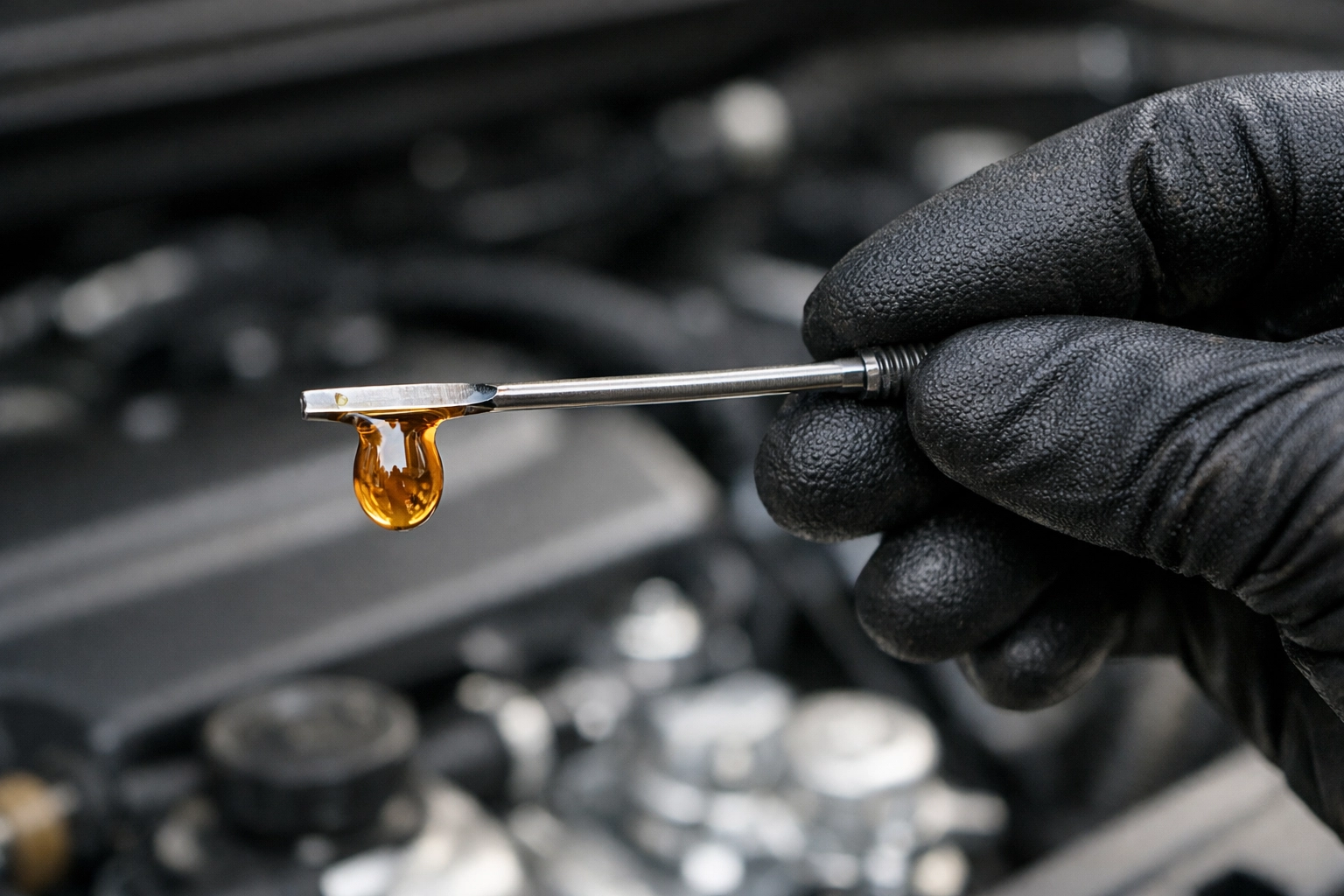
  2. Dark and Dirty Oil: Pull the dipstick. Fresh oil is a transparent amber color (like honey). If it’s black, opaque, or gritty, it’s time for a change.
  3. Engine Noise: If you hear grinding or clattering, your parts are literally screaming for lubrication.
  4. Oil Smell Inside the Cabin: This could mean you have a leak, which can lead to low oil levels and potential fire hazards.

If you see any of these signs, don’t wait. You can book an appointment with us quickly to get it sorted.

A mechanic in Alexandria VA checking a dipstick with clean amber oil during a routine maintenance service.

Why Telegraph Auto Care is Your Go-To Mechanic in Alexandria, VA

We know you have a lot of choices when looking for a mechanic Alexandria VA. At Telegraph Auto Care, we pride ourselves on making the process as stress-free as possible. We don’t just “change the oil”: we provide a comprehensive health check for your vehicle.

ASE-Certified Technicians

When you bring your car to us, it’s being handled by experts. Our technicians are ASE-certified, meaning they have the training and experience to work on all makes and models. Whether you drive a classic sedan or a modern hybrid, we know exactly what your engine needs. Proper diagnostics are key to preventing big bills later; learn more about how auto diagnostics can help you save.

Upfront Pricing

There is nothing worse than getting a bill that’s twice what you expected. We believe in transparency. We provide upfront pricing so you know exactly what you’re paying for before the work begins. No hidden fees, no “surprise” add-ons.

Quick and Professional Service

We know your time is valuable. Our team is dedicated to getting you back on the road safely and quickly. We use high-quality filters and the best oil brands to ensure your engine gets the protection it deserves.

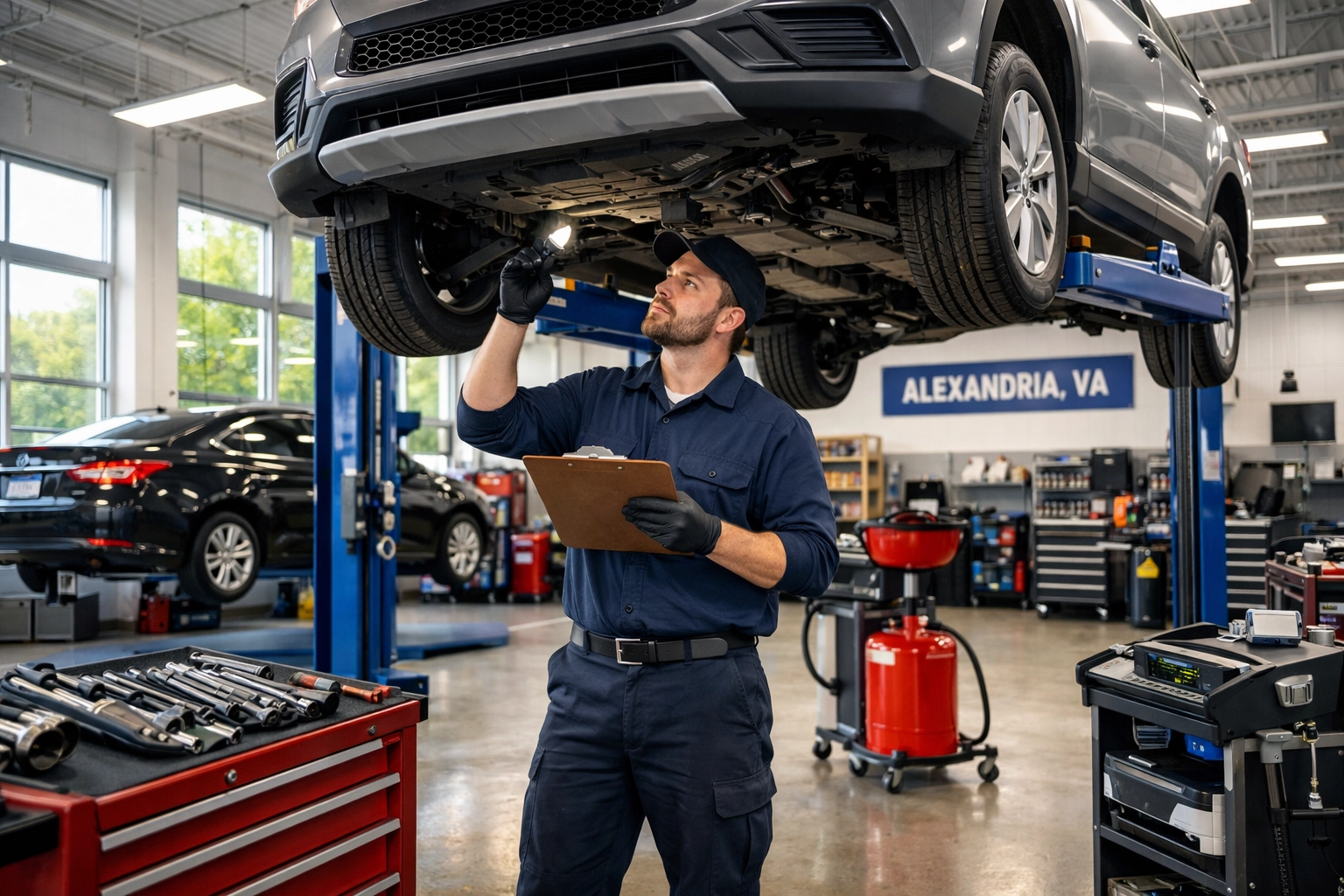
Professional technician performing a vehicle inspection at a modern auto repair shop in Alexandria, VA.

Conclusion: Don’t Wait Until It’s Too Late

An oil change is one of the most affordable maintenance tasks you can perform, yet it offers the biggest return on investment. By keeping your engine lubricated, cool, and clean, you are ensuring that your car stays reliable for years to come.

Is your car due for its next service? Don’t let the sludge build up and drain your wallet. Keep your engine happy and healthy with a professional oil change Alexandria VA.

Ready to give your car the care it deserves? Visit our contact us page or swing by Telegraph Auto Care today. Our friendly team is ready to help you keep your vehicle in peak condition!


5 Common Signs Your Car Needs a Brake Repair in Alexandria, VA

[HERO] 5 Common Signs Your Car Needs a Brake Repair in Alexandria, VA

There is no system in your car more critical to your safety than your brakes. Whether you’re navigating the busy streets of Alexandria or cruising down the highway, you need to know that your car will stop exactly when you need it to.

Brakes aren’t something that fail all at once without warning. In most cases, your car will give you several “hints” that something is wrong. Ignoring these hints doesn’t just make the repair more expensive: it puts you and your family at risk.

In this guide, we’ll walk through the five most common signs that you need to see a mechanic Alexandria VA for a brake inspection. If you want to dive deeper into the technical side of things, check out our post on brake repair signs and how to take action.

1. High-Pitched Squealing or Screeching

Have you ever heard a high-pitched sound when you apply the brakes? That’s not just an annoying noise; it’s actually a safety feature.

Most brake pads are designed with a small metal shim called an “indicator.” When the pad wears down to a dangerous level, this metal shim scrapes against the rotor, creating that tell-tale squeal.

  • The Component: Brake pads.
  • The Function: Providing the friction necessary to stop the wheels.
  • Signs of Trouble: Persistent screeching while driving or braking.
  • The Impact: If you ignore the squeal, you will eventually wear through the pad entirely, leading to “metal-on-metal” contact that destroys your rotors.

2. Grinding Noises

If the squealing has turned into a loud, metallic grinding sound, you are in the danger zone. This usually means the friction material on your brake pads is completely gone. Now, the metal backing plate of the pad is rubbing directly against the iron rotor.

This doesn’t just sound terrible: it significantly reduces your stopping power. At this point, a simple pad replacement won’t be enough; you’ll likely need new rotors as well. If you hear grinding, it’s time for an immediate brake repair Alexandria VA.

High-quality brake rotor and caliper assembly essential for safe stopping and brake repair in Alexandria.

3. Vibrating or Shaking Steering Wheel

When you step on the brake pedal, does the steering wheel or the whole car start to shake? This is a common sign of “warped” rotors.

Rotors are the metal discs that your brake pads clamp onto. Over time, extreme heat can cause these discs to become uneven. When the pads hit those “wavy” spots, the vibration travels through the braking system and up to your hands.

  • The Component: Brake Rotors.
  • The Function: Providing a flat surface for the pads to grip.
  • Signs of Trouble: Pulsing in the brake pedal or shaking in the wheel.
  • The Impact: Uneven braking makes it harder to control the vehicle during emergency stops.

4. The Brake Pedal Feels “Squishy” or Soft

When you press your brake pedal, it should feel firm and provide immediate resistance. If you find yourself pushing the pedal all the way to the floorboard before the car starts to slow down, you have a serious problem.

This “spongy” feeling often indicates an issue with the brake fluid or the master cylinder. It could be a leak in the lines or air trapped in the system. Brake fluid is what transfers the force of your foot to the actual brakes; if the fluid can’t do its job, your brakes won’t work. For more on how these systems interact, see our page on advanced automotive diagnostics.

Driver pressing a firm brake pedal, ensuring vehicle safety and responsive braking during transit.

5. The Car Pulls to One Side

Does your car feel like it has a mind of its own when you brake? If the vehicle pulls to the left or right while you’re slowing down, it usually means your brakes are applying pressure unevenly.

This could be caused by a “frozen” caliper, a collapsed brake hose, or unevenly worn pads. It’s not just a nuisance; it makes the car unpredictable and dangerous in traffic.

Trust the Experts at Telegraph Auto Care

At Telegraph Auto Care, we don’t take chances with your safety. Our ASE-certified technicians provide thorough brake inspections and high-quality repairs. We offer upfront pricing and use the best parts to ensure your car stops on a dime every time.

Don’t wait until you’re in a scary situation on the road. If you notice any of these signs, give us a call or visit our appointment page to schedule a check-up. We’re proud to be your trusted mechanic Alexandria VA, keeping our community safe one car at a time!

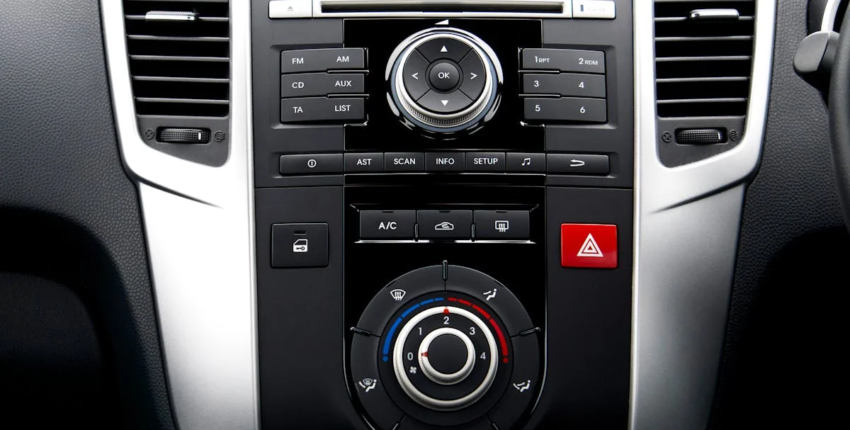
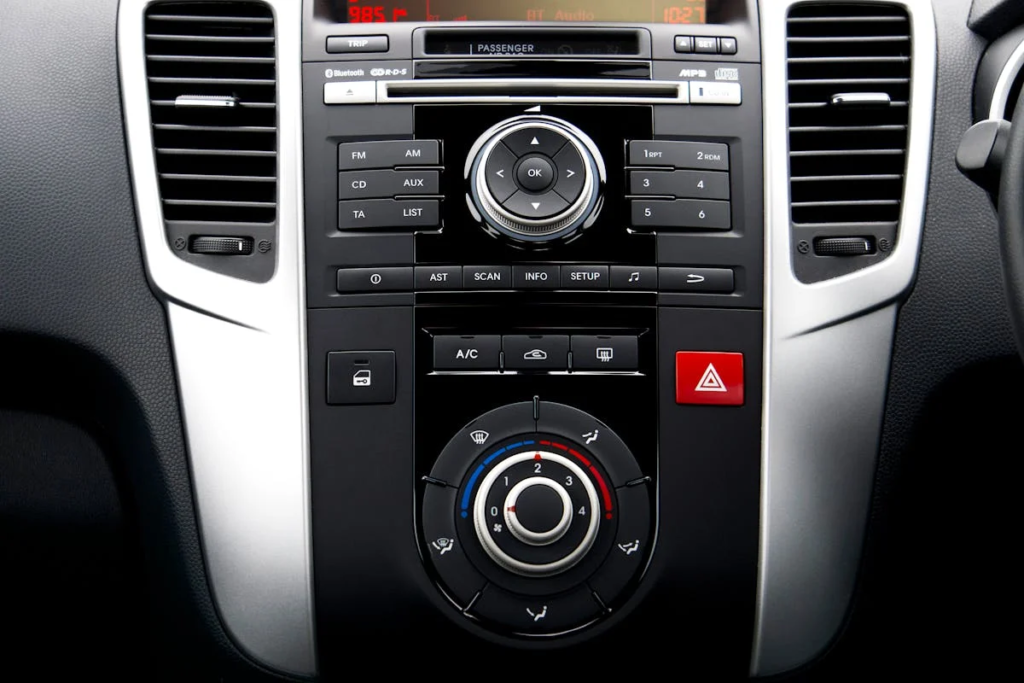
Auto AC and heating system controls for vehicle comfort.

How Auto AC and Heating Services Keep Your Vehicle Comfortable Year-Round

Auto AC and heating system controls for vehicle comfort.

Driving in extreme heat or freezing cold can be uncomfortable. Your car’s air conditioning (AC) and heating system help you stay comfortable. These systems also improve safety. A working AC keeps the car cool in summer. A good heating system keeps it warm in winter. Many people do not think about their AC and heating systems until they stop working. But regular maintenance is important. It helps your system last longer and work better. It also prevents costly repairs. This blog explains how these systems work and why servicing them is necessary.

How Car AC Cools the Air

A car’s AC system removes heat from the inside of the car. It does this by using refrigerant, which is a special cooling fluid. The refrigerant absorbs heat and releases it outside.

The system has several important parts:

  • Compressor: It pumps the refrigerant and moves it through the system.
  • Condenser: It removes heat from the refrigerant and cools it down.
  • Expansion Valve: It reduces the pressure of the refrigerant, making it even colder.
  • Evaporator: It absorbs heat from the air inside the car and makes the air cooler.
  • Blower Motor: It pushes the cool air through the vents into the cabin.

If any of these parts stop working, the AC will not cool properly. For example, if the compressor fails, the AC will blow warm air. If the refrigerant level is low, cooling will be weak.

Why Servicing Your AC and Heating System is Important

Auto AC and Heating Ventilation System for Vehicles.

1. Stay Comfortable in All Weather

A working AC is necessary for hot weather. It keeps the cabin cool. If the AC is broken, the inside of the car can get very hot. In extreme cases, this can cause heat exhaustion, which makes people feel dizzy and tired. In winter, a working heater is just as important. If the heater does not work, driving in cold weather can be uncomfortable. Cold temperatures can also make it harder to focus while driving. Many people do not know that the AC helps in winter too. It removes moisture from the air. This prevents foggy windows, which can reduce visibility. If the AC is not working, the windows can stay foggy, making it harder to see the road.

2. Prevent Expensive Repairs

Fixing a small problem early can save a lot of money later. If the AC is not cooling properly, it might be a small refrigerant leak. Fixing it early is cheap. But if ignored, the compressor can break. Replacing a compressor is very expensive. A low coolant level in the heating system might seem like a small problem. But if not fixed, it can cause engine overheating, leading to major engine damage. Regular maintenance helps find problems before they get worse. This saves money and avoids sudden breakdowns.

3. Better Air Quality

The AC and heating system filters the air inside the car. They remove dust, pollen, and other particles. This is important for people with allergies or breathing problems. The cabin air filter traps these particles. Over time, the filter gets dirty. If not changed, it can block airflow and let bad smells into the car. If you notice weak airflow or a musty smell, the filter may need to be replaced. A fresh filter improves air quality and makes the AC and heater work better.

4. Save Fuel

A broken AC or heating system can increase fuel usage. If the refrigerant level is low, the compressor must work harder. This puts extra load on the engine. More fuel is used to keep the system running. Driving with open windows instead of a working AC also wastes fuel. Open windows create wind resistance, making the engine work harder. Keeping the AC and heater in good shape helps save money on fuel.

5. Improve Safety

A comfortable temperature inside the car is important for driver focus. If it is too hot, the driver can feel tired and irritated. If it is too cold, the driver may feel stiff and distracted. Foggy windows are another safety risk. A working AC keeps them clear. If the AC is broken, visibility can drop. This increases the risk of accidents. Keeping the system in good condition makes driving safer.

Signs That Your AC or Heating System Needs Repair

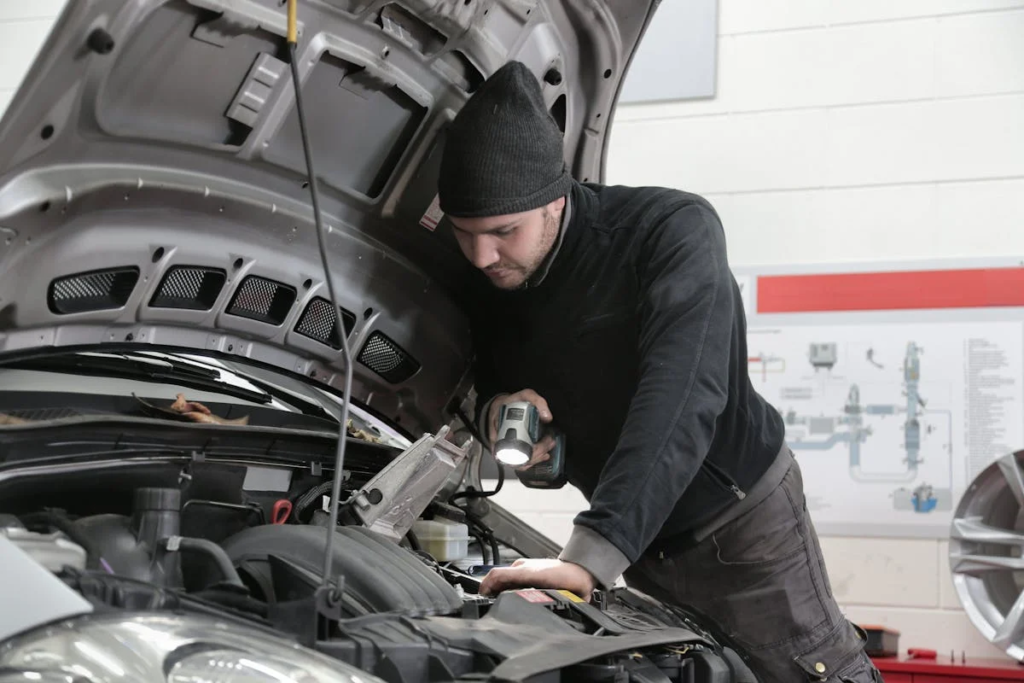
Auto mechanic inspecting engine for repair or maintenance services.

You should get your system checked if you notice:

Weak airflow: Air from the vents is weak or uneven. 

Warm air from the AC: The AC is on, but it is not cooling properly. 

Cold air from the heater: The heater is on, but the air is not warm. 

Strange smells: A bad smell comes from the vents. 

Loud noises: The AC or heater makes unusual sounds. 

Leaking fluid: Puddles form under the car (this could be refrigerant or coolant).

If you notice any of these problems, it is best to get the system checked.

How to Maintain Your Car’s AC and Heating System

Taking care of your car’s AC and heating system helps it work properly and prevents expensive repairs. Follow these simple steps to keep it in good condition:

Turn on the AC regularly

Run the AC for 10 minutes once a week, even in cold weather. This keeps the compressor seals from drying out and prevents refrigerant leaks.

Change the cabin air filter

The cabin air filter traps dust and dirt. A clogged filter reduces airflow and makes the air inside your car smell bad. Replace it every 12,000 to 15,000 miles or sooner in dusty areas.

Check refrigerant levels

Low refrigerant makes the AC blow warm air and can damage the compressor. If cooling is weak, a mechanic should check for leaks before refilling it.

Inspect belts and hoses

Belts and hoses carry refrigerant and coolant. Cracks or leaks can cause system failure. Checking them every few months prevents sudden breakdowns.

Flush the coolant system

Dirty coolant can block the heater core, causing weak heating. Flushing it every 30,000 to 50,000 miles keeps the system clean and working well.

Get regular inspections

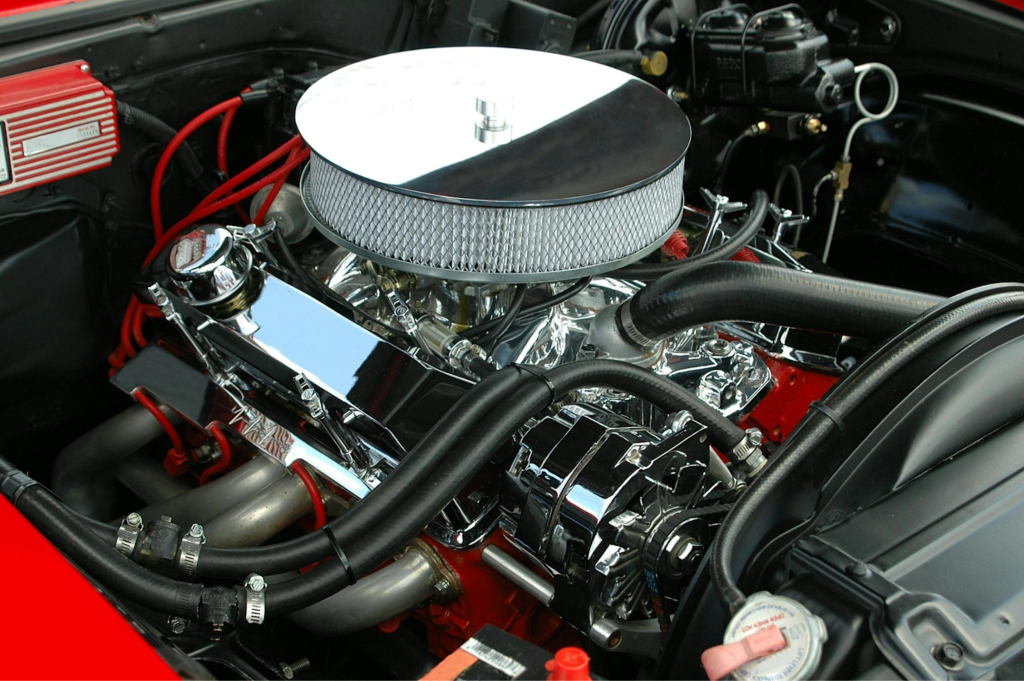
Engine bay with upgraded performance parts and chrome details.

A yearly check-up helps find small issues before they become costly repairs. A mechanic will check the compressor, refrigerant, belts, hoses, and filters to keep the system running smoothly.

Reliable Auto AC and Heating Services at Telegraph Auto Care

At Telegraph Auto Care, we know how important a working AC and heating system is. With over 20 years of experience, we provide expert auto repair services in Alexandria, VA. Our ASE-certified technicians specialize in AC and heating system maintenance, diagnostics, and repairs. We offer quick and high-quality service to keep your car comfortable in all seasons. We

use advanced tools to check refrigerant levels, replace cabin air filters, fix heater problems, and more. Our customer-first approach ensures clear communication and honest pricing. We are open Monday to Saturday and offer 24-hour pickup and drop-off services for your convenience. Contact us today or schedule an appointment online. Visit us at 5700 Telegraph Road for the best auto care in town.

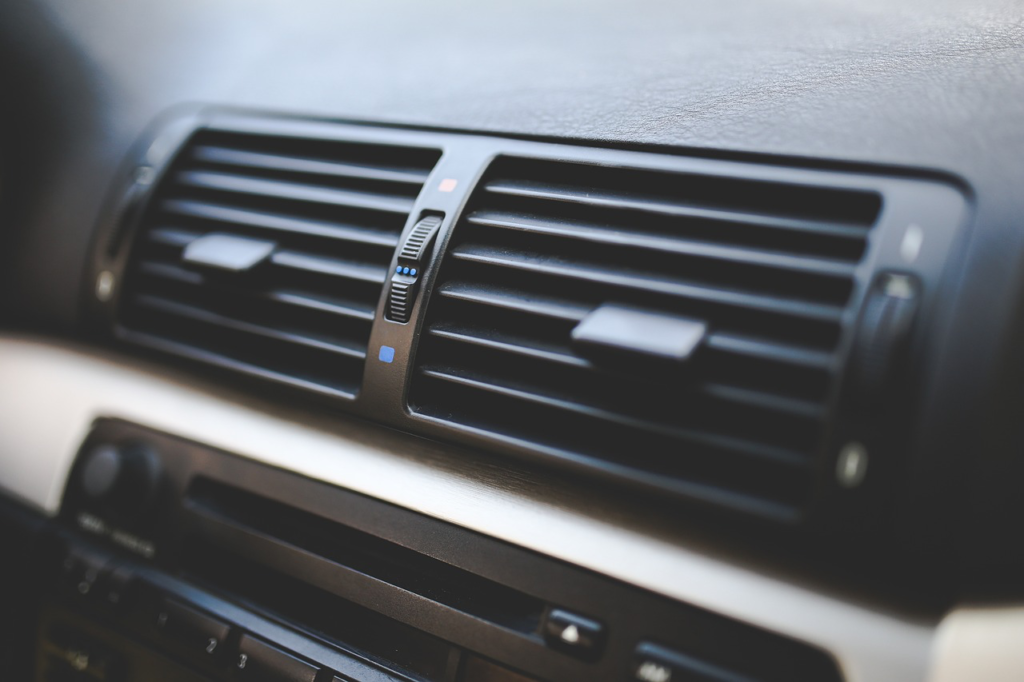
Auto AC vent for vehicle cooling and comfort.

The Top 5 Auto AC Repair Tips To Beat the Heat

Summers are here and we all know what this means. High and scorching temperatures that make it hard to step outside. You feel as if you’re walking on hot coals. But we are lucky that we have our air conditioning systems. They keep us comfortable and cool during our daily commutes. But, what to do when your vehicle’s air conditioning system decides to give up, especially when you need it the most? Don’t worry! In this blog, we’ll walk you through what are the top 5 auto ac repair tips. These are tips that you should know in case your air conditioning gives up on you. This will allow you to keep your vehicle’s air conditioning system in top shape at all times. 

Read More