
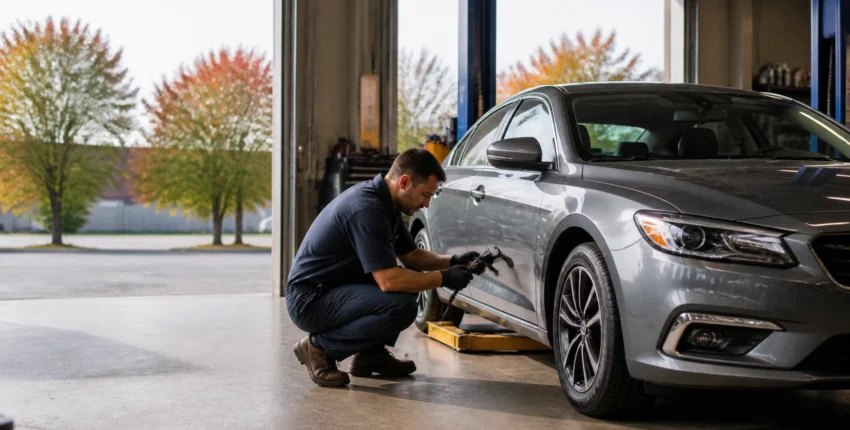
Late August is a smart time to prepare your vehicle for fall driving in Alexandria. The change may seem gradual, but your car notices the shift from hot summer afternoons to cooler mornings, wetter roads, shorter days, and heavier stop-and-go traffic around Northern Virginia.
You do not need a full afternoon to spot many seasonal concerns. This quick checklist covers the items most likely to affect safety, reliability, visibility, and inspection readiness. Set a timer for 10 minutes, walk around your vehicle, and note anything that needs a closer look.
Minute 1: Check your tires
Tires are your vehicle’s only contact with the road, making them the best place to begin.
As temperatures drop, tire pressure usually falls by about 1 PSI for every 10-degree decrease in temperature. A tire that was properly inflated during summer may be underinflated on a cool fall morning. Low pressure can reduce fuel economy, increase tire wear, and make handling less predictable on wet roads.
Check all four tires when they are cold, and compare the readings with the manufacturer’s recommended pressure on the driver’s door-jamb label. Do not use the maximum PSI printed on the tire sidewall as your target.
While checking pressure, look for:
- Uneven wear across the tread
- Cracks, bulges, or objects lodged in the tire
- Tread that appears shallow or worn smooth
- A spare tire that is flat or missing its equipment
If you regularly drive through rain or along roads outside the city, healthy tread is especially important. A professional tire inspection can also identify alignment or suspension problems that may be causing uneven wear.
Minute 2: Look over the battery
Summer heat can be hard on a car battery, and cooler temperatures can expose a battery that is already losing strength. The result may be a slow start: or a vehicle that will not start at all on a chilly morning.
Open the hood and check whether the battery terminals have white, blue, or green corrosion. Make sure the cables appear tight and secure. Do not touch damaged cables or attempt a repair if the battery case is swollen, cracked, or leaking.
If your battery is around three years old or more, have the battery and charging system tested before the colder months arrive. Short trips around Alexandria can be particularly demanding because the alternator may not have enough time to fully replace the energy used during starting.
A battery test is quick, and it can help you avoid an inconvenient roadside breakdown later.
Minutes 3–4: Listen and feel for brake problems
Fall is not the time to ignore a squeak you have been hearing for weeks. Wet leaves, rain, and reduced visibility already make driving more demanding, so your brakes should respond smoothly and consistently.
During your next drive, pay attention to how the vehicle feels when stopping. Warning signs include:
- Squealing, scraping, or grinding
- A brake pedal that feels soft or spongy
- Vibration through the pedal or steering wheel
- Pulling to one side while braking
- A brake warning light on the dashboard
- A noticeable increase in stopping distance
Some brake noises are temporary, but grinding, pulling, or a soft pedal should be checked promptly. A technician can inspect the pads, rotors, calipers, brake lines, and fluid rather than guessing which component is responsible.
Telegraph Auto Care’s guide to brake repair and safe stopping explains why addressing small symptoms early can help prevent more expensive damage.
Minute 5: Check essential fluids
With the engine off and cool, take a quick look at the fluid reservoirs under the hood. Low levels do not always mean your vehicle simply needs a top-off; they can also point to a leak or worn component.
Pay particular attention to:
Coolant
The cooling system worked hard through summer. Check the coolant reservoir level and look for visible leaks around hoses, the radiator area, or beneath the vehicle. Never remove a radiator cap while the engine is hot.
Coolant protects against overheating and freezing, but it must be the correct type and mixture for your vehicle. If the fluid looks rusty, oily, or unusually low, schedule a cooling-system inspection.
Engine oil
Check the oil level according to your owner’s manual. If you are close to your vehicle’s recommended service interval, an oil change is a sensible fall maintenance step. Clean oil supports engine protection, fuel efficiency, and dependable cold starts.
Windshield washer fluid
Replace low or nearly empty summer washer fluid with a cold-weather formula before freezing temperatures arrive. A clean windshield is essential when glare, rain, road spray, or early darkness affects visibility.
You can also ask a professional to check brake, transmission, and power-steering fluids if your vehicle uses them. Follow the maintenance schedule rather than assuming every fluid needs to be changed at the same interval.
Minute 6: Test your wipers and defroster
A fall storm can arrive during the evening commute, and worn wipers can turn a manageable drive into a visibility problem.
Run the wipers and use washer fluid. Replace the blades if they:
- Leave streaks or hazy areas
- Skip across the windshield
- Squeak loudly
- Have cracked or split rubber
Then test the front defroster and rear defroster. They should clear fogged glass effectively. Make sure the vents direct air toward the windshield and that the blower works at each setting.
If the defroster is weak, the problem could involve the blower motor, HVAC controls, cabin filter, or climate-control system. It is better to discover that before the first cold, damp morning.

Minute 7: Walk around and check every light
Earlier sunsets mean you will likely spend more time driving in darkness. A one-minute lighting check can help you see hazards and make sure other drivers see you.
Turn on and test:
- Low-beam and high-beam headlights
- Tail lights
- Brake lights
- Turn signals
- Hazard lights
- Reverse lights
- Fog lights, if equipped
Ask someone to press the brake pedal while you stand behind the vehicle, or use a reflection in a garage door or window. Also check whether the headlight lenses are cloudy or the beams appear misaligned.
Virginia’s safety inspection includes required lighting equipment, so replacing a failed bulb or correcting a lighting issue before inspection may save time.
Minute 8: Notice dashboard warning lights
Your dashboard is an early-warning system. Do not overlook a check-engine, battery, coolant-temperature, tire-pressure, or brake-system light simply because the vehicle still seems to drive normally.
A warning light may indicate anything from a loose gas cap to a charging, emissions, or braking problem. Plug-in code readers can identify a diagnostic trouble code, but the code alone does not always reveal the root cause. Proper diagnosis combines scan data with physical testing.
Telegraph Auto Care’s advanced automotive diagnostics service can help identify problems in systems such as the engine, transmission, ignition, brakes, and exhaust.
Do not clear a warning light just before an emissions test. Disconnecting the battery or erasing codes can reset emissions readiness monitors, and the vehicle may need time and specific driving conditions before those monitors become ready again.
Minute 9: Inspect belts, hoses, and the exhaust
Take a quick look for cracked belts, bulging hoses, loose clamps, or signs of fluid leakage. Rubber components can become brittle over time, and a failed belt or hose can leave you stranded.
Also listen for a new exhaust rattle or a louder-than-usual exhaust note. Exhaust damage can affect emissions performance and may allow dangerous fumes to enter the cabin. If you smell exhaust inside the vehicle, open the windows, avoid unnecessary driving, and have the problem inspected immediately.
Minute 10: Check your inspection calendar
Alexandria drivers generally need to keep two different inspection requirements in mind:
- Virginia’s safety inspection is required annually.
- Most non-exempt vehicles garaged in Alexandria are subject to emissions testing every two years under Northern Virginia’s emissions program.
You can review official emissions requirements through the Virginia DMV emissions inspection information. If your inspection or emissions test is due this fall, do not wait until the last possible week.
A walk-in visit can be useful if you want to handle inspection testing while taking care of a seasonal concern. Telegraph Auto Care provides state inspections and emissions testing on a walk-in basis, with same-day service for these tests and no appointment needed. If your vehicle does not pass, a proper diagnosis can show what needs attention instead of leaving you to guess.
When a 10-minute check is not enough
This checklist is designed to spot obvious concerns, not replace a complete inspection. Schedule professional service if you notice a warning light, fluid leak, brake symptom, weak starting, uneven tire wear, or an exhaust problem.
For broader maintenance and repairs, Telegraph Auto Care’s services include tires, wheel alignment, battery checks, engine diagnostics, brake repair, suspension work, exhaust repair, heating and A/C service, and oil changes. Our ASE-certified technicians provide upfront pricing and explain what your vehicle needs in clear, practical terms.
Start fall with confidence
A few minutes of attention in late summer can help you avoid a preventable breakdown, improve wet-weather safety, and catch inspection issues before they become urgent. Check your tires, battery, brakes, fluids, wipers, lights, and warning indicators now: while the weather is still comfortable and service is easier to schedule.
If your vehicle needs a closer look, visit Telegraph Auto Care for dependable auto repair in Alexandria, VA, or contact the shop to book service. Walk in for your state inspection or emissions test, and let our team help you prepare for the season ahead.