
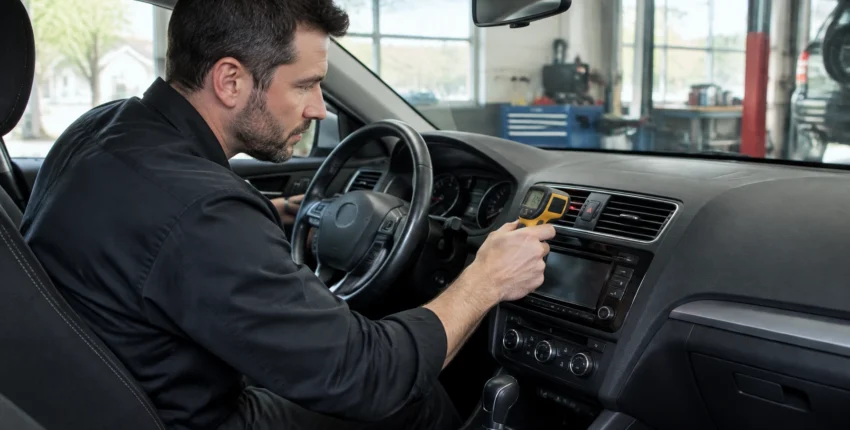
On a cool Alexandria morning, a heater that takes a little while to warm up may not seem urgent. But if the engine has been running and the vents still blow cold, or the windshield keeps fogging instead of clearing, it’s worth finding out why before the first freezing morning.
Your car’s heater depends on more than a dashboard setting. In most gas-powered vehicles, warm engine coolant flows through a small radiator called the heater core. A fan pushes cabin air across it, and HVAC doors direct that warmed air to the vents. A fault in any part of that system can leave you cold. Some causes are relatively straightforward; others can signal a leak or a cooling-system problem that needs prompt attention.
Start with what the symptoms are telling you
Notice whether air is coming out strongly, whether it changes temperature as the engine warms, and whether the temperature gauge behaves normally. Those details help distinguish a heat-generation problem from an airflow or air-direction problem.
A short trip around Alexandria may end before the engine reaches its normal operating temperature, especially after a cold night outside. But if the heater remains cold on a longer drive, or the engine temperature rises unusually high or stays unusually low, don’t assume it’s just the weather.
Low coolant or a coolant leak
What you may notice: The heat fades or comes and goes, the engine temperature changes, or you spot a sweet smell, steam, dampness inside the car, or residue near the engine bay. Some leaks are small and hard to see.
Why it matters: With too little coolant, hot fluid may not reach the heater core properly. A leak can also leave the engine without enough coolant to control its temperature.
What happens if you wait: The cabin may stay cold, but the greater risk is engine overheating and serious damage. Simply adding coolant without finding out why the level dropped can postpone the problem rather than solve it.
If you check the coolant level yourself, do so only when the engine is fully cool and follow your owner’s manual. Never open a radiator or coolant-system cap while the engine is hot. If the temperature gauge climbs into the danger zone, or you see steam or a significant leak, pull over safely, switch off the engine, and arrange help rather than continuing to drive.
Air trapped in the cooling system
What you may notice: Heat is inconsistent, gurgling sounds come from behind the dashboard, or the heater works intermittently after a coolant repair or loss.
Why it matters: An air pocket can interrupt coolant flow through the heater core. It can also point to a system that lost coolant or was not properly filled and bled.
What happens if you wait: The heater may continue to behave unpredictably, and the underlying leak or circulation problem may remain. Removing air requires the right procedure for the vehicle; it isn’t always as simple as topping up a reservoir.
A thermostat stuck open, or closed
The thermostat helps regulate engine temperature by controlling coolant flow.
Stuck open: The engine may take a long time to warm up, the temperature gauge may stay lower than usual, and the cabin air may remain lukewarm. A technician will check whether the engine is reaching and maintaining its normal operating temperature.
Stuck closed: This is more urgent. It can restrict coolant flow and cause the engine to overheat. If the temperature gauge rises rapidly or a warning light appears, stop safely and turn the engine off.
Putting off a thermostat problem can mean continued poor heat, less efficient engine operation, or, in the closed-position scenario, overheating damage. The gauge and overall symptoms matter; cold air alone doesn’t confirm which way a thermostat has failed.
A restricted heater core
What you may notice: The engine reaches normal temperature, but cabin heat is weak. There may also be a sweet odor inside, persistent window film or fogging, or damp carpet if the heater core is leaking.
Why it matters: Deposits or contamination can restrict the heater core’s narrow passages, limiting the hot coolant available to warm cabin air. A technician can check coolant circulation and compare heater-hose temperatures as part of diagnosis.
What happens if you wait: A restriction can leave you without reliable heat or defrosting. If the core is leaking, coolant loss and cabin moisture can become additional concerns. A professional inspection can tell whether the problem is restricted flow, a leak, or something else.

The blower motor or resistor may be limiting airflow
A blower problem usually affects how much air comes out, not whether the heater can produce warmth.
What you may notice: Airflow is very weak or absent, or the fan works on only some speed settings. The issue may involve the blower motor, its resistor or control module, a fuse, wiring, or another electrical fault.
Why it matters: Even a working heater core can’t warm the cabin effectively if the fan isn’t moving air. Weak airflow also makes it harder to clear the windshield.
What happens if you wait: You may lose heat and defrost performance when you need them most. If the fan stops altogether, the windshield can remain fogged. An inspection can isolate the electrical or blower issue instead of replacing parts by guesswork.
A blend door actuator can send air the wrong way
What you may notice: The engine warms normally and the fan blows well, but the vents deliver cold air even when the temperature is set to hot. Clicking or tapping behind the dashboard, or air that changes unpredictably when you adjust the controls, can also be a clue.
Why it matters: A blend door directs air through or around the heater core. If its actuator fails or the door sticks, the system may not send warm air into the cabin.
What happens if you wait: The heat may remain unavailable or inconsistent, and windshield defrosting can be affected if air isn’t directed correctly. Because parts can be tucked behind the dashboard, diagnosis and access vary by vehicle.
Could the A/C be part of a defrost problem?
The A/C system can help remove moisture from the air when the defroster is running. If the A/C has a fault, such as low refrigerant from a leak, the windshield may take longer to clear. That usually doesn’t explain why the heater itself is blowing cold, though.
If you have normal heat but the glass stays fogged, the defrost setting, airflow direction, and A/C operation may all be worth checking. A/C refrigerant should be diagnosed with appropriate equipment; adding refrigerant without checking for a leak may not address the cause. For more on the difference between heating and A/C issues, see Telegraph Auto Care’s heating and A/C repair service.
Why it’s better to act before the first freeze
A working heater is not just about comfort. On humid fall mornings in Alexandria, warm, directed airflow helps clear condensation so you can see through the windshield. If the defroster is weak, you may be tempted to drive before visibility is safe.
Heat loss can also be an early sign of a coolant problem. Ignoring a leak or circulation issue may turn a repair that could be diagnosed early into an overheating problem. That is why cold air deserves attention even if the vehicle still seems to run normally.
You can find more seasonal guidance in our Alexandria winter car preparation guide. But if the heater or defroster is already acting up, don’t wait for the first frost to see whether it gets worse.
Get the cause checked, not guessed
Cold air from the vents can come from coolant level, engine temperature, restricted circulation, a blower fault, or a climate-control door. The symptoms help narrow it down, but testing is the reliable way to identify the cause.
Telegraph Auto Care provides heating and A/C diagnostics and repair in Alexandria, VA. Our ASE-certified technicians bring more than 20 years of auto repair experience, explain findings clearly, and offer upfront, honest pricing. Qualifying repairs are backed by the nationwide warranty through TechNet Professional Automotive Service®.
If your heater is blowing cold or your windshield won’t clear properly, contact Telegraph Auto Care or call 703-640-3990 to arrange service before freezing weather arrives. We’re at 5700 Telegraph Road, Alexandria, VA 22303. Don’t wait for a cold commute to become a visibility or cooling-system problem.