
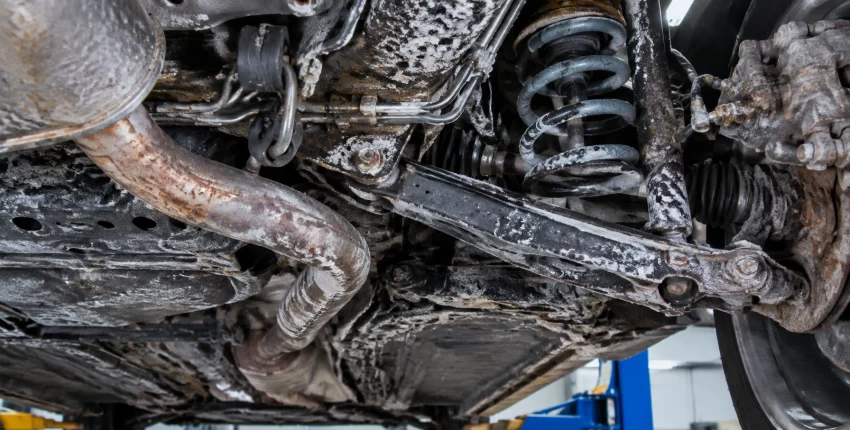
A winter car can look clean from the sidewalk while salt and brine cling to places you rarely see: brake-line fittings, exhaust hangers, suspension joints, wheel wells, and the seams beneath the body. That buildup matters because corrosion can quietly weaken parts long before rust becomes obvious from the outside.
In Alexandria, VA, winter road treatments can reach your car even before the first snow. As of November 2026, road crews in Northern Virginia use salt and brine ahead of storms when conditions allow. VDOT’s winter weather guidance explains that some roads may be pretreated before a storm. The treatment helps manage ice on roads, but residue can ride home on your vehicle.
The best defense isn’t a generic winter checklist. It’s understanding what salt attacks, washing it off at the right time, and having the underside checked before a small corrosion concern becomes a safety problem.
Why salt causes underbody corrosion
Salt doesn’t simply “eat” metal on contact. Corrosion accelerates when chloride-based de-icers meet metal along with moisture and oxygen. Salt helps keep a thin film of water conductive, encouraging the electrochemical reactions that break down metal.
The worst buildup often settles where moisture lingers and rinsing rarely reaches: tight crevices, overlaps, brackets, and seams. A dry-looking exterior doesn’t prove that hidden areas are dry or clean. And rust doesn’t always follow a neat schedule. Vehicle age, protective coatings, design, and how often the car encounters treated roads all make a difference.
Where to pay attention first
The following order is best thought of as an inspection priority, not a guarantee that corrosion always develops in exactly this sequence.
-
Brake lines and fittings: These carry hydraulic pressure to the brakes, so corrosion here has the clearest safety consequence. Lines and fittings can rust where clips or brackets trap wet salt. External inspection matters, but it has limits: corrosion can also develop inside brake lines, and that damage may not be visible from the outside.
-
Exhaust parts and hangers: Pipes, mufflers, tailpipes, and metal hangers face repeated wet-and-dry cycles and road spray. Corrosion can thin the metal, loosen a hanger, or contribute to a rattle or leak.
-
Suspension components: Springs, control arms, subframes, and sway bar links are exposed beneath the car. Heavy corrosion can weaken components or complicate future repairs; damage to suspension parts can also affect handling and tire wear.
-
Wheel wells, rocker panels, and underbody seams: These areas catch spray and can hold damp dirt and salt. Seams and enclosed edges are especially easy to overlook during a quick walk-around.

Wash after the treatment, not in the middle of the storm
A car wash with an undercarriage spray is most useful on a safe, dry day after a storm or after driving on treated roads. Washing during active weather is usually poor timing: roads may be treated again, and you may pick up fresh residue on the way home. Wait until conditions are safe, then give the underside a rinse.
The weeks after salt has been applied matter more than the day snow falls. Brine may be laid down before snow arrives, and repeated drives can add more residue afterward. Make an underbody rinse part of your follow-up care through the treated-road period rather than treating one wash as a permanent fix. AAA’s road-de-icer recommendations likewise advise washing the full vehicle, including the undercarriage, to remove newer road salts.
If you use a self-service wash, direct water toward the underside and wheel wells without holding a high-pressure nozzle close to delicate parts, wiring, or seals. A rinse can remove surface deposits; it can’t repair corrosion or confirm the condition of hidden brake lines.
Rustproofing helps only if the surface is ready
A corrosion-resistant coating may help protect suitable metal surfaces, but it is not a shortcut over dirt, dampness, or existing scale. Salt and moisture trapped under a coating can continue to cause trouble, while an unsuitable application may cover areas that need to stay clear.
Before applying a rustproofing product or undercoating, make sure the vehicle is clean and fully dry and that the product is appropriate for the areas being treated. Have a qualified professional assess the condition first, especially if you see flaky rust, damaged coatings, or a possible fluid leak. Do not coat brake friction surfaces or apply products indiscriminately around hot exhaust components, moving parts, or drainage openings.
Know the brake warning that means stop driving
A brake line can weaken or leak without giving you a clear visual warning. Internal corrosion may not show on an outside surface, so a visual check alone cannot rule it out.
A soft, spongy, or suddenly low brake pedal is a stop-driving-now symptom. If it happens, pull over somewhere safe, switch on your hazard lights, and arrange a tow to a repair facility. Don’t continue driving to see if the pedal improves. A brake warning light, a sudden change in pedal feel, or a visible brake-fluid leak also deserves immediate attention.
A routine inspection can identify visible corrosion, damaged fittings, leaks, or other concerns, but no inspection should be described as a guarantee that hidden internal corrosion is absent. If you’re concerned about your brakes, ask a technician to assess the system and explain what can, and cannot, be confirmed.
How often should someone look underneath?
There isn’t one universal schedule for every car. A practical approach for drivers who use treated roads is to have the underside checked whenever the vehicle is lifted for maintenance, such as an oil change, and to arrange a more thorough look at least once a year. A check after repeated winter exposure can also be sensible, particularly for an older vehicle or one with visible underbody rust.
Ask the technician to pay particular attention to brake lines and fittings, exhaust pipes and hangers, suspension parts, wheel wells, and underbody seams. If something needs attention, clear findings and upfront pricing make it easier to decide what is urgent and what can be monitored.
Telegraph Auto Care provides brake repair, exhaust system repair including mufflers and tailpipes, and suspension service. Our broader auto repair services also include oil changes and tire services. State inspections and emissions testing are available on a walk-in basis, with same-day service and no appointment needed.
Protect the parts you can’t see
Salt and brine are part of winter road treatment, but letting residue sit beneath your car for months doesn’t have to be. Rinse the underbody on a safe, dry day after treated-road exposure, pay extra attention in the weeks when salt is being used, and ask for an underside inspection during regular service. Most importantly, treat a soft or suddenly low brake pedal as an emergency, not a wait-and-see issue.
For drivers seeking auto repair in Alexandria, VA, Telegraph Auto Care brings more than 20 years of experience, ASE-certified technicians, and upfront, honest pricing. Visit us at 5700 Telegraph Road, Alexandria, VA 22303, and ask us to inspect your vehicle’s underside. If you’ve noticed a brake-pedal change, arrange a tow rather than driving in. Call Telegraph Auto Care to discuss your vehicle and the next safe step.