

When you’re cruising down Duke Street or navigating the stop-and-go traffic near Old Town, the last thing you want to worry about is whether your car will actually stop when you hit the pedal. Your brakes are, without a doubt, the most critical safety feature on your vehicle. But let’s be honest: most of us don’t think about them until they start making a weird noise or the car feels a bit “off.”
At Telegraph Auto Care, we’ve been the go-to mechanic Alexandria VA residents trust for over 20 years. We’ve seen it all: from minor pad replacements to full-on braking system overhauls. We know that catching a problem early doesn’t just save you money; it keeps you and your family safe on the road.
In this guide, we’ll dive into the five most common warning signs that your car is screaming for a brake repair Alexandria VA. If you notice any of these, it’s time to swing by and let our ASE-certified experts take a look.
1. Squealing, Squeaking, or Grinding Noises
Have you ever pulled up to a red light and heard a high-pitched screech that made everyone on the sidewalk turn and look? That’s not just an embarrassing moment; it’s your car’s way of saying “help!”
The Squeal: A Built-in Warning
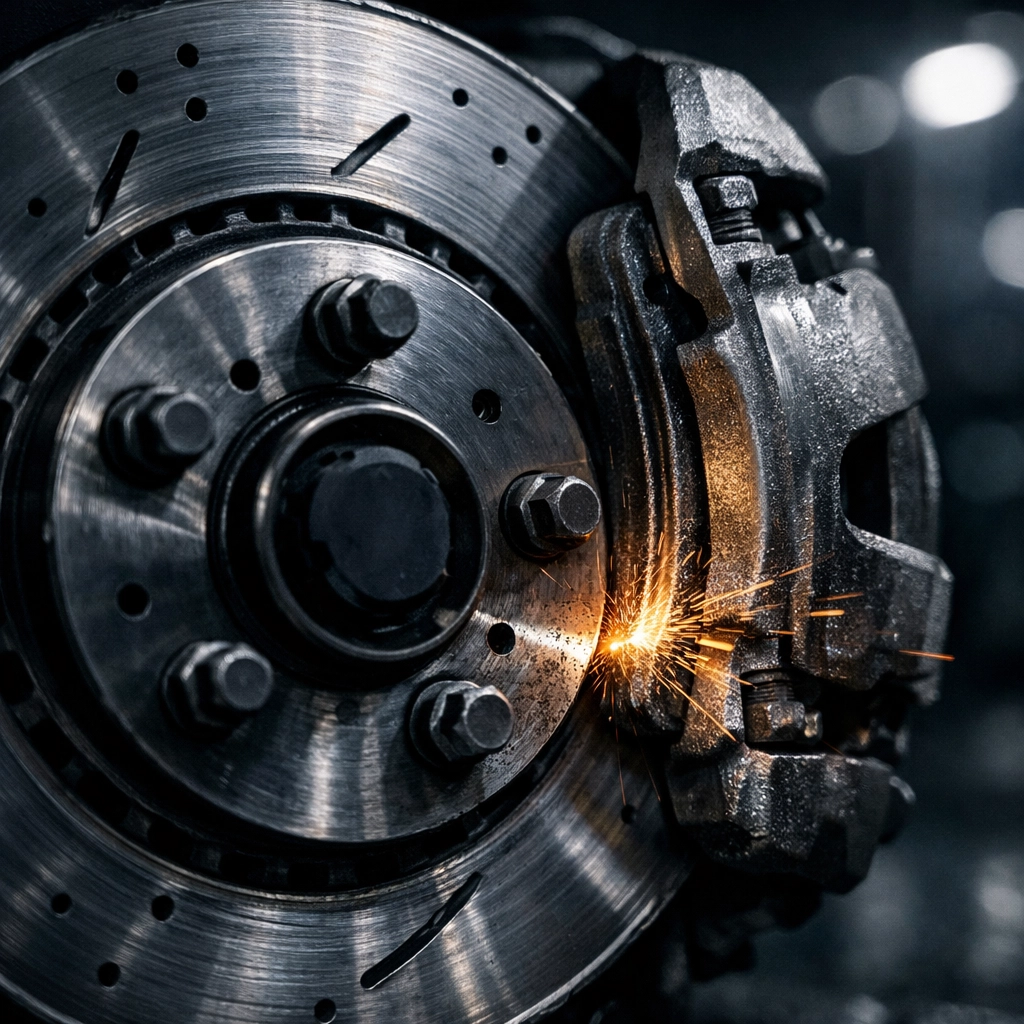
Most modern brake pads are designed with a tiny metal shim called a wear indicator. Think of it like an alarm clock for your wheels. When the friction material on your brake pads gets dangerously thin, this metal shim makes contact with the rotor, creating that piercing squeal. It’s a helpful reminder that your pads are reaching the end of their life.
The Grinding: The Danger Zone
If the squealing stops and turns into a deep, metallic grinding sound, you’ve moved from “maintenance needed” to “emergency.” Grinding means the friction material is completely gone, and the metal backing plate of the pad is rubbing directly against the iron rotor. This is like rubbing two pieces of sandpaper together: eventually, something is going to break.
The Impact of Ignoring It:
Ignoring a grind doesn’t just mean a louder noise; it means you are actively destroying your rotors. Instead of a simple pad replacement, you’ll likely need a much more expensive repair involving new rotors and potentially new calipers.
2. A Soft, Spongy, or “Low” Brake Pedal
When you step on the brake pedal, it should feel firm and provide consistent resistance. If you feel like you’re stepping into a bowl of mashed potatoes, or if the pedal sinks all the way to the floorboard, you have a serious hydraulic issue.
What is “Spongy” Exactly?
In the world of auto repair, “spongy” means the pedal feels soft and requires more effort or distance to actually engage the brakes. This is often caused by air getting into the brake lines. Your braking system is a sealed hydraulic environment. Since air is compressible and brake fluid is not, air bubbles act like a cushion, preventing the force of your foot from reaching the wheels.
Checking for Leaks
Another culprit could be a brake fluid leak. If your fluid is low, your car can’t generate the pressure needed to stop effectively. You might see a small puddle of clear or amber-colored fluid under your car near the wheels.
The Impact of Ignoring It:
A soft pedal is a precursor to total brake failure. If the hydraulic pressure drops low enough, you might find yourself in a situation where the car won’t stop at all. This is why checking your fluid during standard maintenance auto service is so vital.
3. Vibrations or Pulsations When Braking
If your steering wheel shakes or your brake pedal pulses under your foot like a heartbeat, your car is trying to tell you something about your rotors.
Warped Rotors 101
The rotor is the large metal disc that your brake pads clamp down on to stop the car. Over time, the extreme heat generated by braking can cause these discs to warp or develop “thin spots.” When the pads try to grab a surface that isn’t perfectly flat, they bounce, which sends a vibration through the braking system and up to your foot or steering wheel.
Alexandria Driving Habits
In a city like Alexandria, VA, we do a lot of heavy braking. Whether it’s hitting the brakes suddenly on I-95 or riding them down a steep hill, heat is the enemy. Overheated rotors are much more prone to warping.
The Impact of Ignoring It:
Vibrations reduce the contact patch between the pad and the rotor, which means your car won’t stop as quickly as it should. Plus, the constant shaking can lead to premature wear on your suspension and steering components.

4. Longer Stopping Distances (Brake Fade)
This is a subtle sign, but a dangerous one. Do you find yourself starting to brake earlier than you used to? Does it feel like the car is “gliding” a bit too far before coming to a complete halt? This is known as “brake fade.”
Why Performance Drops
Brake fade usually happens for two reasons:
- Worn Pads: There simply isn’t enough friction material left to grab the rotor effectively.
- Overheated Fluid: If you’re a “heavy” braker, your brake fluid can actually boil. Once it boils, it loses its ability to transfer force.
The Safety Risk
In an emergency situation: like a pedestrian stepping into the crosswalk or a sudden pile-up on the Beltway: every inch matters. A car that takes an extra ten feet to stop is a car that’s at risk of an accident.
The Impact of Ignoring It:
Decreased braking performance is a direct threat to your safety. If you feel like your car isn’t as “snappy” as it used to be, you should visit a mechanic Alexandria VA immediately for a diagnostic.
5. The Brake Warning Light Stays On
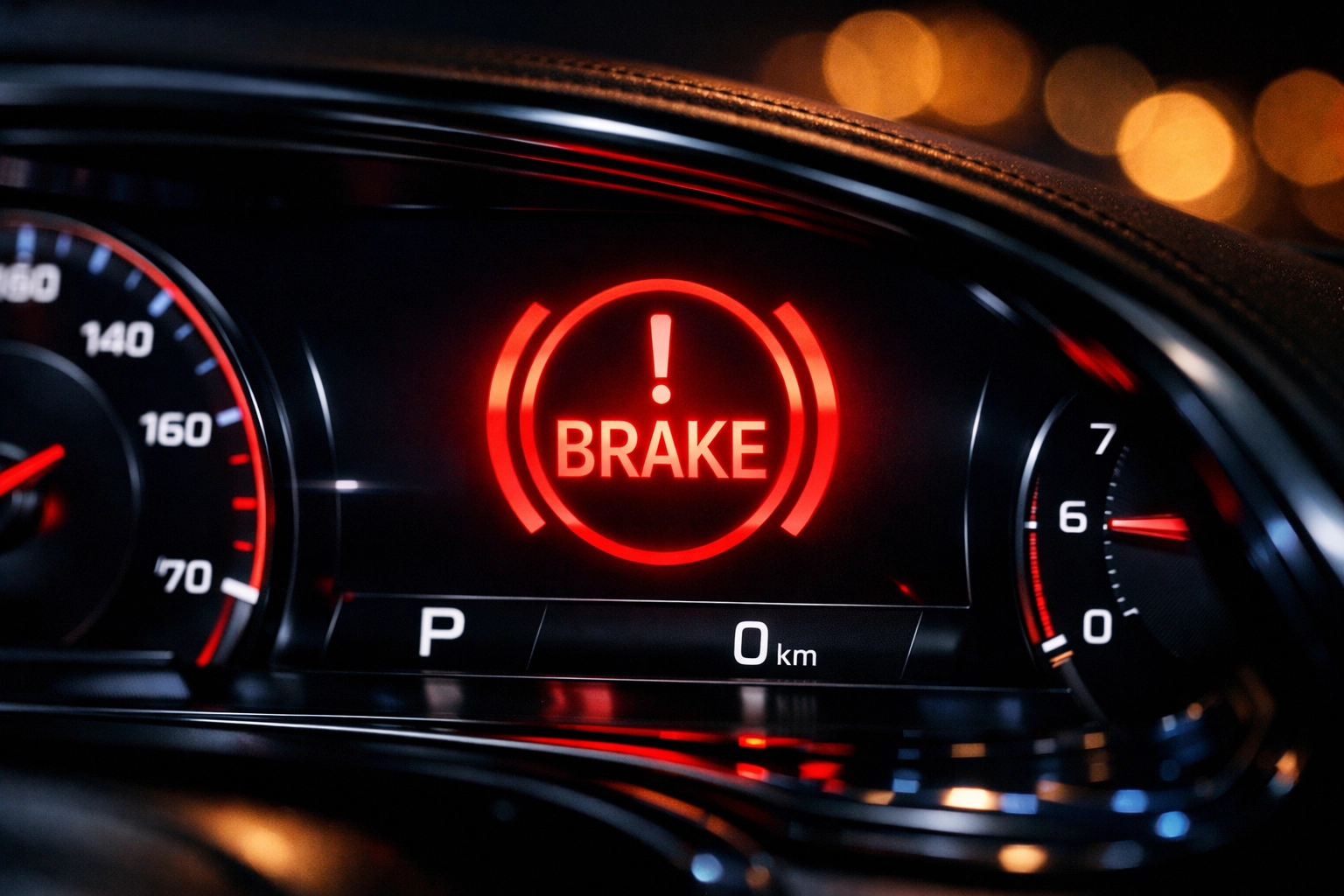
Your dashboard is like your car’s central nervous system. When a light comes on, it’s because a sensor has detected something outside of normal parameters.
Red vs. Yellow Lights
- The Brake Light (Red): Usually indicates that your parking brake is engaged, your brake fluid is dangerously low, or there is a major pressure loss in the system.
- The ABS Light (Yellow/Amber): This refers to your Anti-lock Braking System. While you’ll still have manual braking power, your car won’t be able to prevent the wheels from locking up during a skid.
Don’t Guess, Diagnose
Modern cars have complex sensors that can detect thin pads before you even hear them squeal. If that light is on, don’t play the guessing game. Use advanced automotive diagnostics to find the exact root of the problem.
The Impact of Ignoring It:
Modern safety systems like ABS and Traction Control rely on your brakes working perfectly. Ignoring a light could mean these systems fail when you need them most, like during a rainy Virginia afternoon.
Why Choose Telegraph Auto Care for Your Brake Repair in Alexandria, VA?
We get it: auto repairs can be stressful. You want someone who knows what they’re doing and won’t charge you for things you don’t need. That’s exactly why we’ve built our reputation over the last two decades.
20+ Years of Experience
We aren’t the new kids on the block. We’ve been serving the Alexandria community for over 20 years. We know the local roads, the local climate, and the specific ways they affect your vehicle.
ASE-Certified Experts
Our technicians aren’t just “car guys.” They are ASE-certified experts. This means they’ve undergone rigorous training and testing to ensure they meet the highest standards in the industry. When it comes to brake repair Alexandria VA, you want the best of the best working on your vehicle.
A Friendly, Casual Approach
We believe in treating our customers like neighbors. We’ll explain exactly what’s going on with your car in plain English: no confusing jargon, just honest advice. Whether you need a simple fluid top-off or a complex auto electrical service, we’re here to help.
Don’t Wait Until It’s Too Late
Brake issues don’t fix themselves. In fact, they only get more expensive (and more dangerous) the longer you wait. A simple squeak today could be a total system failure tomorrow.
If you’ve noticed any of these signs: the noises, the smells, the vibrations, or the lights: do yourself a favor and get it checked out. It’s the best way to ensure your car stays on the road and out of the body shop.
Ready to get those brakes checked? You can schedule an appointment online or stop by our shop in Alexandria. We’re always happy to help you stay safe on the road!
For more tips on keeping your car in top shape, check out our car mechanic shop guide or read more about brake repair signs. Safe driving!